
The Mistake Almost Everyone Makes First
The second a garage door starts making an odd sound, most homeowners reach for a can of WD-40 and spray every moving part they can see. It's an easy habit to fall into — WD-40 is cheap, it's already under the sink, and a quick spray feels like you've handled the problem. The door often even sounds better for a week or two.
The trouble is that WD-40 is a solvent and water-displacer, not a long-term lubricant. It can wash grease out of roller bearings and hinges, and in a part of Texas where dust, pollen, and grit blow around constantly, that thin residue turns into a grinding paste faster than you'd expect. Spraying it on everything also masks the sound without fixing what's underneath, so by the time the noise comes back, the real cause has had extra weeks to wear further. Noises are information. The goal isn't to quiet them down — it's to figure out what they're pointing to.
Grinding: A Rough, Metal-on-Metal Scrape
Grinding usually shows up as a harsh, continuous scraping sound as the door moves, sometimes paired with visible shuddering or the door moving unevenly along the track.
- Worn or damaged rollers — a technician checks these first because they're the most common culprit. Nylon rollers crack or flatten over time, and steel rollers lose their bearings. The fix is straightforward roller replacement, usually done in sets rather than one at a time.
- Dry or corroded track — tracks that have lost their lubrication, or picked up rust from humidity and storm moisture, create friction the rollers weren't designed to push through. The fix is cleaning the track and applying a proper garage-door-rated lubricant, not a household spray.
- Bent or misaligned track — a stray basketball, a bumped car, or wind-driven debris from a storm can knock a track out of alignment. This requires realigning or replacing the track section, since a bent track will keep chewing through rollers if it's left as-is.
Squealing: A High-Pitched Whine
Squealing is sharper and higher-pitched than grinding — often described as a screech that happens right as the door starts moving, then tapers off.
- Lack of lubrication — this is checked first because it's the most common and least expensive cause. Hinges and rollers that haven't been lubricated in a while will squeal under load. The fix is a light coat of silicone or lithium-based garage door lubricant on hinges, rollers, and the top of the track.
- Worn rollers or hinges — if lubrication doesn't quiet the sound, the metal parts themselves may be worn down and need replacing rather than oiling.
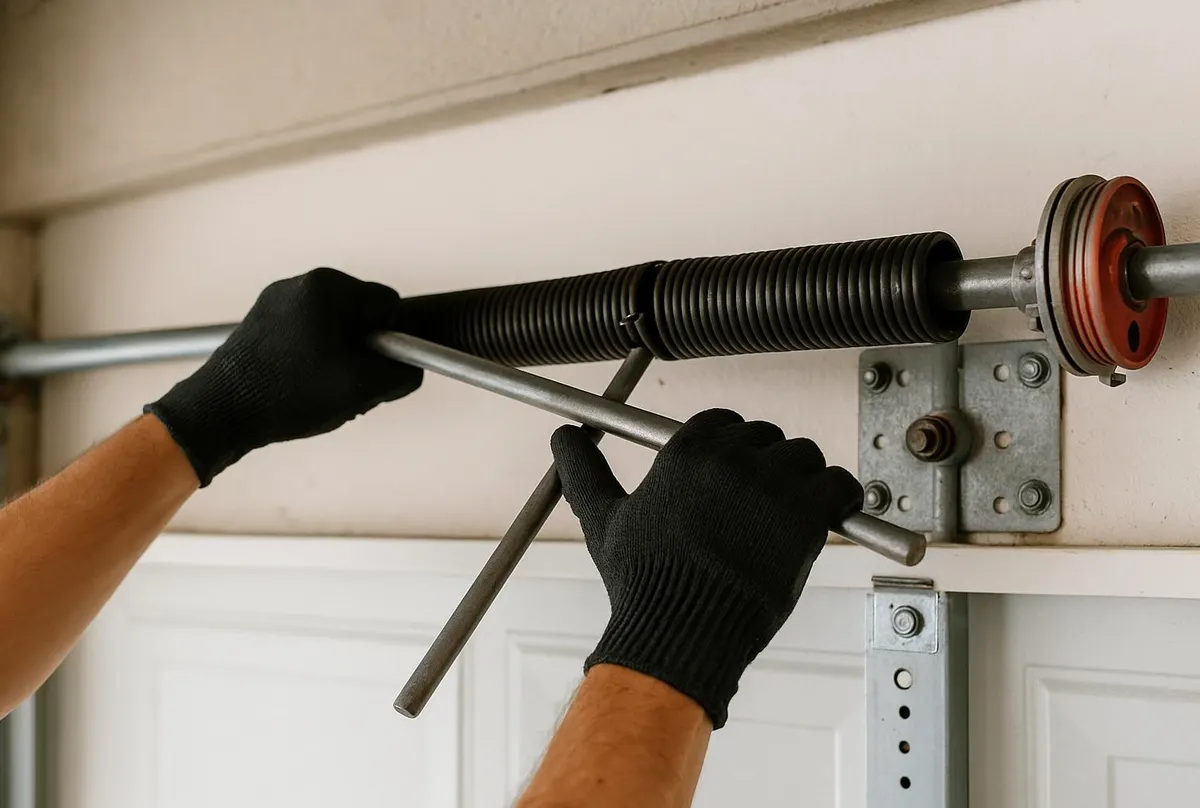
- Spring under strain — a spring nearing the end of its life can squeal as it stretches and compresses. This is checked last because springs are under heavy tension and aren't something to diagnose or touch by hand — it calls for a technician to inspect and, if needed, replace it.
Popping: A Sudden Snap or Bang
Popping is different from the other sounds because it's abrupt — a single loud snap or bang, sometimes strong enough to make you jump, rather than a continuous noise while the door runs.
- Spring issues — this is the first thing checked, and for good reason. A popping sound can mean a spring has shifted, is unwinding unevenly, or has broken. Springs store enormous tension, especially torsion springs mounted above the door, and a broken one can cause the door to slam or become impossible to lift safely. This is not a DIY repair — it requires a technician to replace the spring with the correct size and tension for your door's weight.
- Loose hardware — brackets, bolts, or hinges that have worked loose over time can pop as they shift under the door's movement. The fix is tightening or replacing the hardware, which is a quick check once springs are ruled out.
- Panel flex — on hot days, metal panels expand, and on sudden temperature swings during a storm front, they can contract just as fast, sometimes causing a dented or slightly warped panel to pop as it flexes. This usually means a panel repair or replacement rather than an adjustment.
Rattling: A Loose, Shaky Clatter
Rattling tends to sound like loose parts shaking against each other throughout the whole cycle of the door opening or closing, rather than one sharp noise.
- Loose nuts, bolts, and brackets — checked first because vibration from daily use naturally works hardware loose over months and years. The fix is going panel by panel with a wrench and tightening everything back down.
- Worn rollers — rollers that have developed play in their bearings will rattle as they travel. Replacement is the fix, same as with grinding.
- Opener chain or belt slack — if the rattling is coming from the opener rail rather than the door itself, the chain or belt may need tensioning. This is a quick adjustment but worth having checked alongside the opener's other moving parts.
When to Call Porter Garage Door
A squeal that goes away after lubrication is one thing. A loud pop, a grinding sound that's getting worse, or a door that shakes visibly as it moves is a sign to stop using it and get a professional opinion before it turns into a stuck door or a safety issue. Porter Garage Door handles both ends of that spectrum — Garage Door Maintenance visits catch worn rollers, dry hinges, and loose hardware before they turn into bigger repairs, and our Spring Replacement service handles the noises that point to tension problems, using the correct spring size and proper safety procedure rather than a quick patch.
If your garage door in Porter, New Caney, Kingwood, Humble, Splendora, Huffman, Atascocita, or Conroe has started making a noise that wasn't there last month, give Porter Garage Door a call. We'll figure out what it's telling you and fix the actual problem — not just the sound.